Embrace strategic laziness and reclaim your evenings.
1. Your Kitchen is a Warzone. Again.
“What’s for dinner?” It’s not a question, it’s the daily existential dread that hits precisely when your brain, already fried from work, school runs, and general adulting, decides to stage a coup. You stare into a refrigerator full of ingredients that stubbornly refuse to assemble themselves into a coherent meal.
The clock ticks. The kids whine. The result? Another expensive takeout order, a pile of half-used, soon-to-be-spoiled produce, and the lingering guilt that you’re somehow failing at the most basic human function.
2. The Myth of the Meal Planning Martyr
Most of us tackle this chaos with the brute force of a drill sergeant: rigid, week-long spreadsheets meticulously detailing every breakfast, lunch, and dinner. We spend hours scouring Pinterest for gourmet recipes, only to discover our family collectively revolts against the “deconstructed kale salad” on Tuesday.
We fight picky eaters, double-shop for forgotten ingredients, and then crash into bed, utterly defeated, wondering why a system meant to save time just stole our soul. It’s a grueling, unsustainable sprint that leaves you exhausted, broke, and even more stressed than when you started.
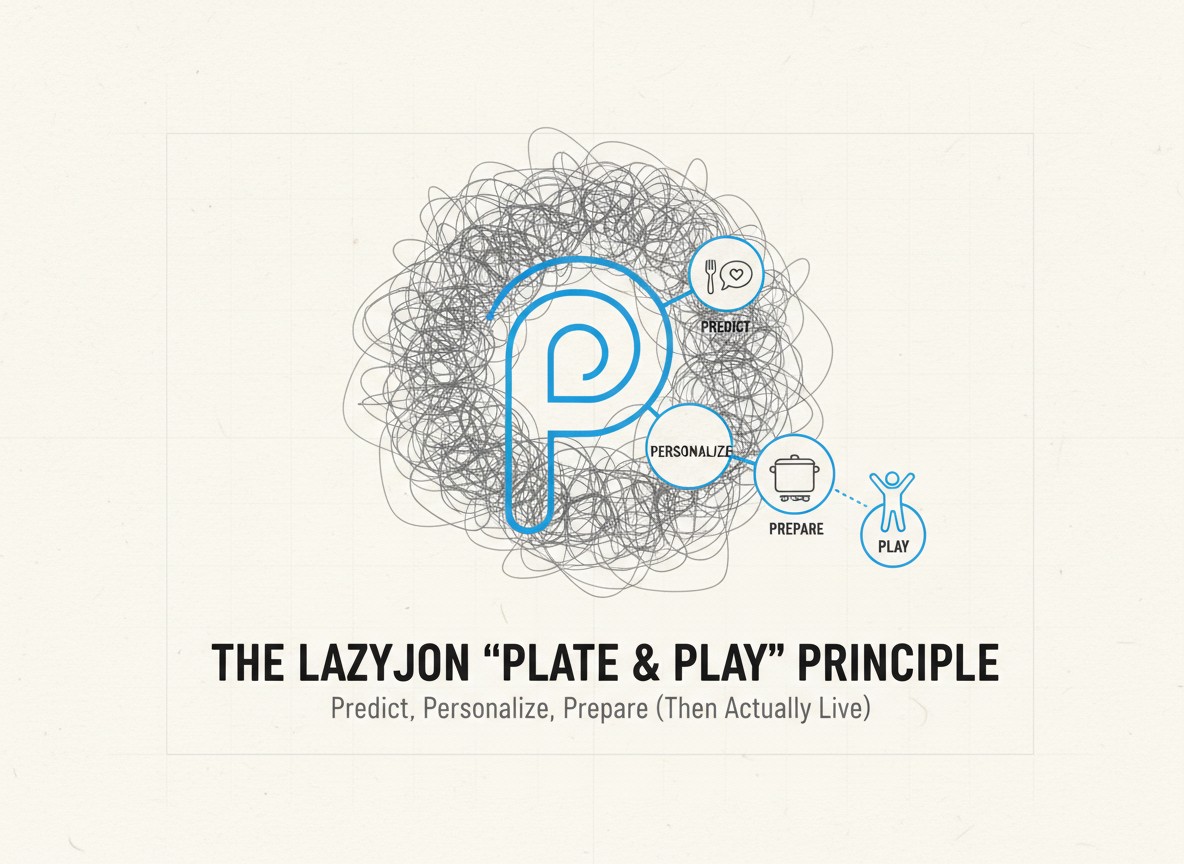
3. The LazyJon “Plate & Play” Principle: Predict, Personalize, Prepare (Then Actually Live)
Forget the culinary Olympics. At LazyJon, we believe the best meal plan is one you actually stick to. And that means embracing strategic laziness.
Our philosophy is simple: Predict, Personalize, Prepare (and then, Play). This isn’t about cutting corners on nutrition or flavor; it’s about elegantly streamlining the process using both clever analog hacks and smart digital tools. We’re cutting through the noise to build a kitchen system that works for you, turning dinner dread into effortless delight.
4. Your Instant “Plate & Play” Meal Planning Toolkit
Here are 4 concrete, immediately actionable steps to transform your weekly meal routine:
The “Theme & Team” Hack
Stop trying to be a Michelin-star chef every night. Pick 3-4 flexible themes for your week (e.g., “Taco Tuesday,” “Pasta Power,” “Roast & Repurpose,” “Fridge Forage Friday”).
Then, crucially, involve your family (yes, even the tiny humans) in choosing their favorite within those themes. A simple kitchen whiteboard or a shared digital note does the trick. This drastically reduces decision fatigue and boosts buy-in.
The “Pantry Scout & Auto-List” Play
Before you even think about grocery shopping, “scout” your fridge, freezer, and pantry. What needs to be used up? What staples are running low?
Use a dedicated meal planning app like Cooklist (which tracks inventory) or Paprika (which generates lists from your recipes) to build your shopping list. This isn’t just about convenience; it’s about minimizing food waste and preventing impulse buys.
The “Double-Duty Prep” Command
Become a batch-cooking ninja. Roast two chickens instead of one, chop double the veggies for two different meals, or make a massive batch of rice/quinoa.
The slightly extra effort upfront is minimal, but the time saved on busy weeknights is monumental. Think of it as pre-loading your week with future-you’s sanity. Leftovers aren’t a failure; they’re intelligent prep.
The “Flex-Day Forage”
Rigid plans break. Build at least one “flex day” (or two) into your week.
This isn’t a blank slate; it’s a designated “leftover night,” “pantry challenge” (cook whatever you find!), or an “easy button” evening for simple meals or even planned takeout. This baked-in flexibility is your secret weapon against stress, ensuring your plan adapts to life, rather than fighting it.
5. The Long-Term Feast: More Life, Less Labor
Embracing the LazyJon “Plate & Play” principle isn’t about settling for less; it’s about achieving more with less friction. By smartly predicting your family’s preferences, personalizing your approach to fit your actual life, and preparing intelligently, you’ll reclaim hours from grocery aisles and kitchen counters.
You’ll save serious cash by slashing food waste and impulse buys, and finally, you’ll ditch the daily dinner dread. Imagine: actual family dinners that foster connection, not chaos. That’s the real win.